

‘Are people rational’ is a very popular question in some corners of academia (and the internet). However, it’s not quite clear what this question even means, and it can be interpreted in at least two mutually exclusive ways.
The first is whether people approximate rational models when reasoning about the world.
By rational models, I mean those set of models invented (discovered?) over the years by philosophers, mathematicians, economists, computer scientists, and psychologists. You have probably heard of some of them; Probability Theory, Bayes Theorem, Classical Logic, Expected Utility Theory, Signal Detection Theory, and others. Very few believe we literally calculate out these equations in our head, but might we still act as-if we do?
The second interpretation is whether people, when they do not approximate rational models, are still rational in a more global sense (believing true things and making good decisions1).
It’s not obvious that a perfect statistician and logician would be a great decision-maker. Nor is it obvious that among the people we consider to be great decision-makers, that they are universally good statisticians and logicians. So there is a question over whether statistics and logic actually define what it mean to be rational.
Whether people reason as-if they are using rational models, and whether those models are even rational in the first place, are both interesting questions. So I thought it would be fun to provide some backstory for this debate, before providing my own take on why I abandoned the study of rationality altogether.
Backstory
In 1967, there was a large analysis of 110 experiments, trying to answer the question of whether people were intuitive Bayesians. That is, whether by default people were basically good statisticians. Their conclusion: yes! They found that statistics provide “a good first approximation for a psychological theory of inference.” The paper was titled, Man as intuitive statistician.
This may be shocking to many of those familiar with modern psychological research. This is definitely not the dominant view of human cognition 60 years later, where most see humans as systematically “biased.” How did we pull a complete 180?
Well, back then the methods were quite different. They often used things like an urn filled with different colored marbles, and subjects were allowed perhaps 1,000 trials over an hour to learn and make predictions about what was in the urn. When given such a set-up, people indeed began to act like they were using Bayes Theorem (albeit conservatively, they didn’t quite update enough). And given that the dominant view of cognition at the time was that the brain computes, then why wouldn’t it compute Bayes Theorem? Or at least come to the same conclusion as-if it were using Bayes Theorem? After all, Bayes Theorem isn’t just any theory, it is the theory which gives you the objectively correct answer about how uncertain something is (at least according to proponents).

Many of the studies that were done to support this idea were done in the lab of Ward Edwards, most famous for inventing (discovering?) Bayesian Decision Theory. As it so happened, one of his star pupils was Amos Tversky. As the story goes, Tversky was brilliant and charming, and therefore the kind of person you never debate in public. And for the first part of his career, he was a disciple of Edwards arguing that humans were essentially Bayesian in nature.
Then, one fateful day2, Daniel Kahneman invited Tversky to present to his class. This was a little strange because the two apparently had never really spoken before (some students thought they hated each other). But Tversky accepted and spoke about a study done in Edwards lab where subjects took poker chips from a bag, and had to estimate the composition of the bag (i.e., how many red vs white chips). The result from the study is that people got pretty close to getting it right, almost as-if they were using Bayes. Sure, they were not quite updating their estimate enough based on the data they were getting and so they were conservative Bayesians, but they did indeed seem to be Bayesians.
Kahneman listened to this talk, and couldn’t believe his ears. The experiment being described seemed patently absurd. Subjects pulled red chips out of a bag and then concluded there are more red chips than other colors? Well, no duh! Why was Tversky emphasizing how closely subjects approximated Bayes when he should be emphasizing how lousy they were at approximating Bayes even in this very simple set-up?
The talk ended, and now it was time for Kahneman to respond, “Brilliant talk,” he said, “but I don’t believe a word of it.” Then, according to those who were there, Kahneman took Tversky “to the wall” and completely annihilated all of Tversky’s arguments. This was shocking. Tversky was brilliant and never lost debates.3
But to his credit, Tversky went home and began to rethink his entire understanding of the human mind. In the subsequent weeks, he began talking with Kahneman more consistently, and the two stumbled on a very different methodology than the types of studies Edwards used. They called it the Psychology of Single Questions.4 This is the more popular (and easier) methodology now dominant in the field, and this method tends to show people making silly mistakes, such as systematically deviating from Bayes Theorem (and other rational models).
This new research was so popular that all of the previous research by Edwards, Tversky, and others seemed to get memory-holed. The new narrative was that people were nowhere close to being rational. Researchers in this tradition would write books about how irrational humans were, and comparisons of humans to Homer Simpson abounded. The idea that anyone ever thought humans were rational came to be seen as absurd and laughable.
Long time critic of Kahneman and Tversky, Gerd Gigerenzer was curious about what happened to Edward’s research, and mailed him to try and understand why Edwards wasn’t still doing research showing people were intuitive Bayesians. As Gigerenzer recounts
In response, Edwards sent a long, emotional letter in which he criticized cheap experiments with little control and thoughtless normative standards that portrayed people as irrational: “You are right in taking the illusionists to task for their kneejerk version of the Bayesian position”. But why had he not voiced his critique in public? Edwards wrote that he had turned away from the field because “if I had stayed with it, I would have to argue in public with them [Kahneman & Tversky]”. In his letter, Edwards referred to Kahneman and Tversky as “my boys” and wrote that one thing he regretted most in his professional life was that he “didn’t clamp down on my boys earlier”. According to Lewis, Edwards was anxious to avoid any public controversy with them. “Amos was the most terrifying mind most people had ever encountered. They were afraid discussing with him” (Lewis 2017, 155) and “no one wanted to get in a fight with Amos. Not in public!” (Lewis 2017, 319).
Do people approximate rational models?
With all that backstory, how might we answer the question of whether people “approximate” rational models?
Edwards and others (including Tversky’s earlier work) showed that in some situations where people are given time to learn, people absolutely do approximate rational models. In the 60’s we had over a hundred experiments showing that people were “intuitive statisticians.” Other experiments have shown they approximate other rational models given the right situations. For example, people do not fall prey to Confirmation Bias when given context, as opposed to being asked to reason about meaningless cards.
But also, Kahneman and Tversky and their intellectual heirs show that in other situations this is not true. In some situations, people vary significantly from rational models. Especially in the methodology that they use, the Psychology of Single Questions. Or in the same Confirmation Bias example, when they do have to reason about meaningless cards.

The disagreement between these two camps are not really about whether the experiments are replicable, but rather they are questions about whether the methods used can really tell us how people typically reason in typical situations.
Kahneman and Tversky provided evidence5 that people reason using heuristics such as Availability, Representativeness, and Anchoring. And that does seem like a pretty good description of what is happening in these experiments. But is that really all human reasoning is? Or might humans rely on different cognitive strategies depending on the situation? Might the heuristics become more informed with time? Might heuristics combine together in interesting ways to create more complicated mental processes? And can the Psychology of Single Questions possibly answer these questions?
The Heuristics and Biases paradigm was designed specifically to surface the reasoning strategies people use. But it’s not clear that most decisions in life really resemble anything like a series of trick questions asked by a psychologist trying to show people are not rational. And if those single questions are not representative of real life, then the very idea that people rely on systematically flawed heuristics is up for debate. People may in fact by intuitive Bayesians if these questions are not representative.
Of course, the same rhetorical point can be asked of Edward’s research; are most decisions in life really like pulling marbles from an urn? That too seems quite different from reality. If real life is nothing like that, then it may be reasonable to conclude that people are not intuitive Bayesians.
As the debates are not about replicability of the experiments, I think it is fair to say that everyone agrees that sometimes people approximate rational models, and sometimes they do not. What is less clear is the boundaries of when this happens, and more importantly, whether most of our life exists inside or outside of those boundaries.
In so far as this is a meaningful line of inquiry, it seems to me like the only way to resolve this debate is to get outside of the lab, and to study decision-making in real life. That way we can understand the nature of real life decisions, how people tend to make those decisions, and whether the decisions made resemble anything like rational models.6
But that leads us to the last question; would it even matter if people didn’t reason as-if they were using these rational models?
Are people rational even when they do not use or approximate rational models
The Heuristics and Biases tradition which Kahneman and Tversky founded is frequently misunderstood, even by prominent researchers in the field, as saying people are irrational. But in fact, Kahneman has said he hates the word.
“I don’t think that people are irrational. I don’t like the word ‘irrational’ altogether,” Kahneman said. “It reminds me of frothing at the mouth and humans are nothing of the kind.” Source
And
MR: You say you don’t like the term irrational.
DK: We don’t like it at all. Because I think it’s a complete misunderstanding. To claim we were studying irrationality – we absolutely were not. All the examples that we deal with were examples that worked on us. It’s just that we knew better because we had thought about the statistics. But every intuition that we described was an intuition that we found appealing, and we never thought we were irrational or stupid or anything like that. I really hate that word. And the word “rationality” in my mind is a technical word. It describes logic, and people cannot be rational in that sense anymore that they can speak perfectly grammatically. Obviously, they don’t. Source
And
DK: What I think has happened is that a lot of our work has been misunderstood as an indictment of human cognition. One of my least favorite words is the word irrationality. I’ve never used it. Rationality is a technical definition of the logic of decision making, or the logic of probability, which people intuitions simply cannot conform to. It’s not feasible for rationality, as defined in this, it is not feasible. So it’s not even interesting to say that people are not rational. Of course, they’re not fully rational, as decision theorists would define rationality, nobody can be. The question is to characterize how people think in a constructive way, and how that generates both correct judgments and error. Most of our judgments are correct, but the errors are not random. The errors are predictable and systematic. Source
I’ve previously shared the only communication I ever had with Kahneman in which he stated that he wasn’t interested in errors for their own sake, but only because the errors allowed us to understand the underlying heuristics.
More recently, Richard Thaler has said, “I don’t use the word irrational. I would say that we’re human and we don’t behave according to the models that economists write down and call rational.”
According to the founders of the field, there is a difference between “not conforming to rational models” and “irrational.” Biases are deviations from rational models, but that does not mean they are irrational.

This in turn would seem to imply that you can be rational even when not conforming to rational models. But yet, I’ve never heard Kahneman or Thaler ever state this explicitly. In Kahneman and Tversky’s original paper on small numbers which launched the Heuristics and Biases paradigm, they called people’s intuitions a “multitude of sins,” “indefensible,” “self-defeating,” and “ludicrous.” And that seems to still be the dominant way of talking about and thinking about biases. Based on how they talk about biases, I personally find it hard to believe that Kahneman and Tversky did think, or that Thaler really does think, that biases are not inherently irrational.
To try and better understand what is happening here, I will refer to Model-Rationality, wherein one’s reasoning conforms to rational models, and True-Rationality, wherein one is reasonable, competent and adaptive enough to believe true things and make good decisions. The question we are trying to figure out is whether these two types of rationality are equivalent.
There are a few different ways of thinking about the relationship between these two types of rationality. I will describe and briefly respond to the most popular views.
Full-metaphysical-equivalency: In some deep way, the universe itself dictates that True-Rationality is the same as Model-Rationality. In this view, rational models are not just invented, they are discovered. Bayes Theorem is not just a good model, but the objectively correct model which defines what it means for something to even be considered evidence. This normative realism is much broader than mere moral realism, and necessitates that every bias is de facto irrational, as there is no situation in which you should ever deviate from what a properly applied rational model says you should do.
I’ve gotten into many debates with people like this over the years. Typically rationalists (in the tradition of Descartes) in the rationalist community (in the tradition of Yudowsky). This metaphysical position is hard to argue against because it is a pre-empirical assumption. What scientific evidence could we ever point to so that we can settle this? It is a philosophical debate, not a scientific one.
Tautological-equivalency: It’s not that there is some metaphysical alignment between reality and our models, but rather, we define our models tautologically to be rational (e.g., even if you are a virtue ethicist, and you truly believe in doing x, then x is the highest utility option and therefore the rational option as defined by Expected Utility Theory)
This feels like smuggling in normative realism through the backdoor; presupposing some kind of commensurability between theories such that everything comes out according to one’s preferred theory. If such commensurability is possible, then we should be able to just as easily use Virtue Ethics as our standard, and yet no one in the field does that. Regardless, this is either metaphysical or definitional, and so not really something that can be settled by appeal to science.
Definitionally-irrational: We define the problem away. There is partial overlap between True-Rationality and Model-Rationality, but we only use the word ‘bias’ when that overlap exists. Therefore a bias is de facto irrational, but not every deviation from a rational model is a bias because the two types of rationality are not always equivalent.
This approach was introduced to me by Dilip Soman. The problem I see with it is in the identification of which situations require rational models, and which do not. I doubt Dilip and I could come to consensus, and our differences would not be purely empirical, but might come down to pre-empirical believes about reality, or of our ethical views. Therefore, whether a bias is present becomes a philosophical debate, and not a scientific one.
Pragmatist: Rational models are human inventions, and are applied by humans. In some real sense, the use of rational models is always ‘naïve’ in that there is no “true” way to apply them that gives us an objectively correct answer (except in some toy problems where everything relevant is already predefined). Because of this, sometimes using rational models leads to good decisions and sometimes not, and so measuring deviations from them is an exercise in futility because it’s not an objective standard except in toy problems.
This is the position I take. It is not scientific to ask whether Expected Utility Theory (for example) is objectively rational in any given situation, and so it is the wrong lens to be using when you are studying how people reason and decide.
Fully-exclusive: There is no situation in which True-Rationality and Model-Rationality overlap. This doesn’t mean all biases are rational, only that a deviation from a rational model is uninformative. Perhaps instead of rational models, you should obey revelation, a holy book, your heart, Deontological rules, or whatever dear supreme leader tells you to do.
A perfectly valid approach depending on your ethical commitments.
Each of these different interpretations seem to not differ in their understanding of psychology experiments, but in their metaphysical and meta-ethical assumptions. That is, the differences are not resolvable by science.
I think it is rather clear that people are capable of being reasonable, competent, and adaptive, but deciding whether they are Model-Rational when they do so feels intractable and unscientific because it’s not clear if rational models are actually normative, and even if they are, whether they can be applied impartially and objectively such that a comparing people to them is a reasonable thing to do.
So, are people rational?
Does it seem like a silly question to anyone else? Is the term “rational” even meaningful?
Even those who believe the term “rationality” to be meaningful are pretty skeptical about improving it. Kahneman was very pessimistic about the possibility of overcoming biases, arguing that it is much easier to change organizations, processes, and our environment than the cognitive machinery on which humans operate. This forces us to ask whether rationality is a dimension on which an individual can even vary. Keith Stanovich has tried to quantify this with his Rationality Quotient (RQ), but as far as I am aware, this hasn’t led to any breakthroughs in how to improve rationality.
Those in the Rationalist Community may disagree with Kahneman’s pessimism. That community, more than perhaps any other in history, has taken the idea of rationality seriously. So are they the Übermensch we should all aspire to be? And, if they are, why isn’t there copious amounts of research on them? Why isn’t JDM pointing them out as exemplars of what they want to achieve? While I love the community (or at least parts of it), so far it seems the academic community is unwilling to hold them up as the platonic ideal of their field.7
Given these metaphysical and definitional differences, and given the fact that it’s not even clear that you can improve your rationality, can I propose an alternative view?
Ditch rationality. It is not a meaningful term and cannot be studied scientifically. Rationality doesn’t exist in an objective enough way to lend itself to scientific analysis.
I’ll admit two exceptions to this rule.
One, you can study whether the brain itself operates on rational models, and that’s fine. If you believe the Brain is literally computing Bayes Theorem, that is a valid research project you can work on. Even if wrong, it is at least science.
Two, you can study economic rationality within the context of economics or other extremely quantifiable domains. Quantifiable domains are where rational models really excel, and it makes sense to use them as a normative standard there (most of the time). But even if they weren’t truly normative, Behavioral Economists are tasked with making psychology commensurable with economics, and so are forced to use rational models anyways. That is the constraint of their discipline, and so their use of rational models, even if somewhat irrational, can be excused.
Beyond these two exceptions, researchers leave the realm of empiricism and science whenever they start to ask whether people are rational, or compare humans to rational models.
But if not rationality, then how can we study normative decision-making? Well, you probably already know where I am going with this.
Rationality may not exist, but expertise does. All over the world, people develop incredible skills in their jobs, in sports, in art, or whatever else. Expertise is not pure intuition, nor is it rational models. To try and carve out expertise into either System 1 or System 2 would be a mistake. Expertise is fully using all our human facilities to make difficult decisions in the real world.
We know experts are superior at these things because we can see the superiority without needing to reference metaphysical assumptions, or debating the normativity of models. In the domains we study in Naturalistic Decision Making, experts regularly make life or death decisions. Shouldn’t that be taken as a sign that what experts are doing is real? Far more real than the comparison to rational models that currently dominates Judgment and Decision-Making literature?
Those in Heuristics and Biases regularly argue heuristics are rational most of the time, but then focus entirely on those situations where their answers are perceived as irrational. Fast and Frugal researchers may admit heuristics can lead to errors, but they spent their entire time pointing out all the ways heuristics are great. Meanwhile, those in the tradition of Edwards with their balls-and-urns…well, I actually don’t know what they are up to because for some odd reason I was never taught about them.
But at the end of the day, all three are stuck in labs, watching people make decisions in situations which don’t look anything like the rest of life. Whatever they discover about how people decide will always be suspect, all of their claims about the quality of people’s decision-making will be insufficient. They will never be able to assess what the default human decision-making process looks like, or what it looks like when humans are acting Truly-Rational in their day-to-day lives.
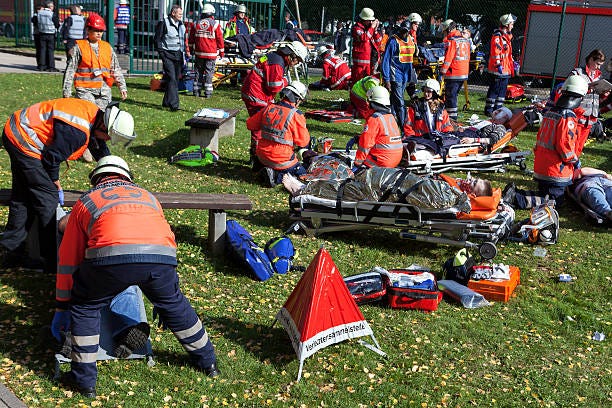
If you want to know if humans are capable, competent, and adaptive, or how to train them to be, then you have to study capability, competence, and adaptivity in the real world. You have to study human expertise. When you do this, you will pretty quickly realize that the vast majority of good decision-making in the real world looks nothing like rational models. And not just in high stakes domains like firefighting, but in most of life people are not even trying to be Model-Rational, but to be more expert. Once you see this, you will see rationality for what it is; unscientific chaff ready for the fire.
The technical terms for this are Epistemic Rationality and Instrumental Rationality
Pulling mostly from Michael Lewis’ The Undoing Project, but also various other things I’ve read over the years
Kahneman likes to note that both Tversky and himself were Israeli, and that this sort of exchange was a national past time that they were both conversant in, but which might have been slightly shocking to the Americans present
Though Kahneman actually attributes it to Walter Mischel (this entire video is worth the watch)
Fight me Popperians
Though, it is still unclear how to get a representative sample of real life decisions, so perhaps not even getting out of the lab will help
There’s also very strong selection effects which should make us skeptical about the effects of the community. Nevertheless, I do think they have helped me to reason better within the context of academic discussions and internet debates, and I think there is something to be said about that. However, their impact on other aspects of my life was less than ideal. It took a combination of my wife and the NDM tradition to train me out of their narrow style of thinking and being.
Hi Jared, been a while since I read your work. Curious to understand how you define “expertise” and “expert”. I’m only vaguely familiar with NDM—I know of the firefighter study. What sort of expertise do you study and how does that teach us to make better decisions?
For example, do we need to study super grandmasters in chess? Or is it worth studying a 1000 elo player if I’m a 700 elo player? The kinds of decisions they make are wildly different. Would learning anything about how a super GM decides on what moves to make help me make better decisions in other non-chess domains? Should we study professional ballerinas or pianists? Also, we are almost universally experts at walking, eating, and procrastinating. Is that the kind of expertise that interests NDM folks?
Worth noting that there's a whole other research program devoted to *irrationality* (in the sense of delusions or other thinking that doesn't appear to track evidence) as a legitimate, and sometimes valuable form of cognition: Lisa Bortolotti most notably in philosophy of psychiatry but there are others too. Not to mention, motivated reasoning as an adaptive and inherently social process for which "bias" or even heuristics misses the point. So maybe another problem with "are people rational" is that it doesn't even have a robust picture of irrationality, let alone rationality - only relative deviations from models.
I'm also wondering about the distinction between practical rationality concerned with best course of action, and thinking that is more reflective or at least detached from practical considerations. It's easier to understand rationality as expertise when there's an imminent decision that can be evaluated. And yet, I do think there must be people who are "experts" at certain kinds of thinking and theorizing, even where there's no action at stake.