
Something It Is Like To Do Math
Making sense of 'Mathematica: A Secret World of Intuition and Curiosity' by David Bessis

Imagine a world where cars existed, but it was all taxis, F1 racing, and Disney’s hit attraction Autopia in which you drive on rails. Students get to “experience” driving through Autopia, but opportunities to understand what it is like to drive in an actual car are rare.
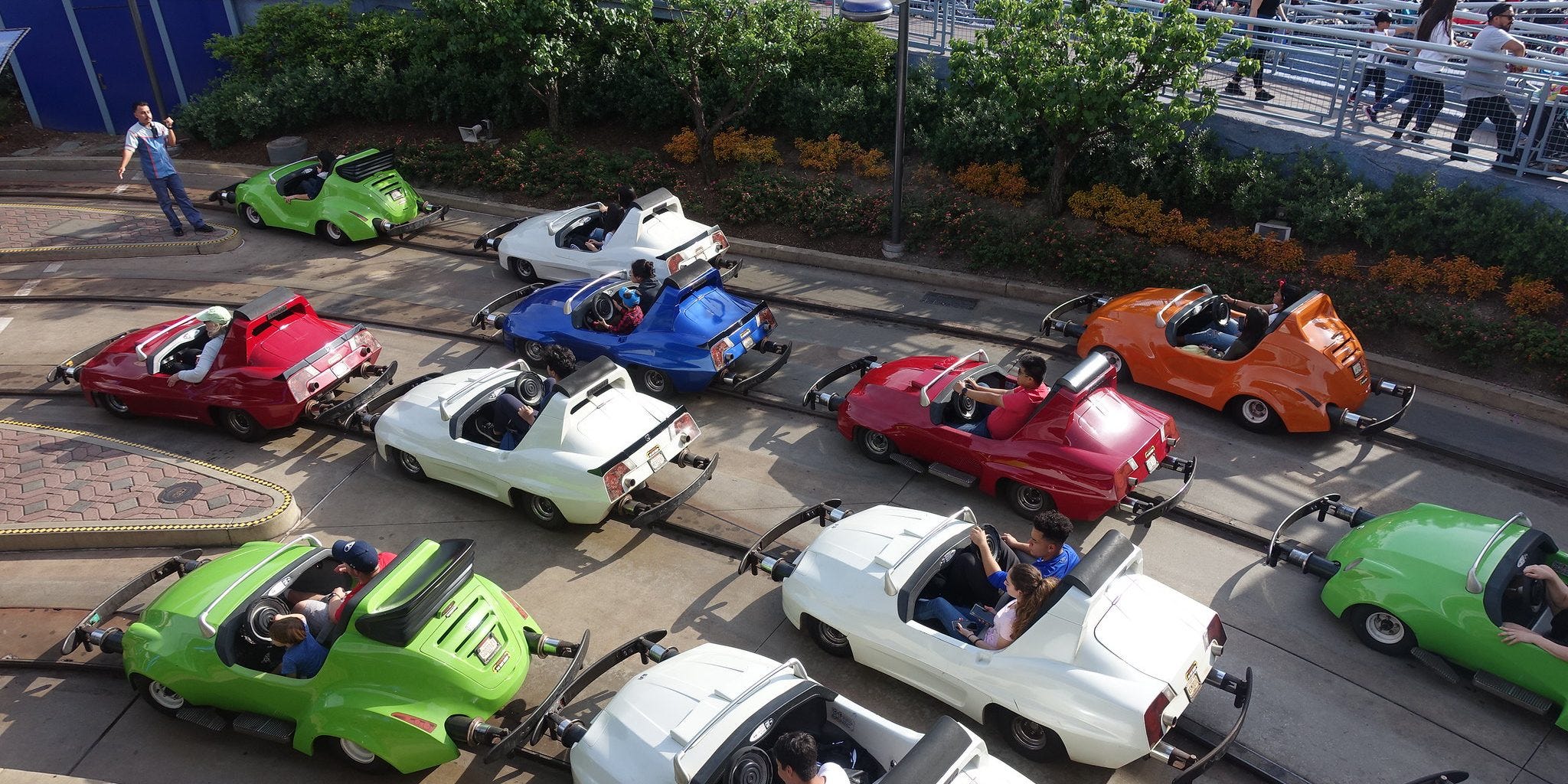
Absent real experience, students learn to drive through memorizing the rules. A popular question in Driver’s Ed is to list the steps required for a left turn; when to start braking, how hard to press the pedal, how far to pull into the intersection, how to decide the moment to turn, when to look for pedestrians, etc. A single missed step is of course catastrophic, and so you must show all your work, and it must all be correct; there is no partial credit.
Students hate it, of course. “I’m just not really a driving person,“ is a common sentiment. They ask questions like, “When are we ever going to use this? I can just get a taxi.” Researchers are sympathetic to the student’s plight; “Not everyone can be Michael Schumacher.” But some students will eventually get a knack for it, so teachers assign a lot of homework in hopes the rules will finally sink in through pure repetition.
This is, of course, a metaphor for math.
It is possible to do math as a series of rules that manipulate digits, and that fact sometimes makes us think that math is just a series of computations. But is it?
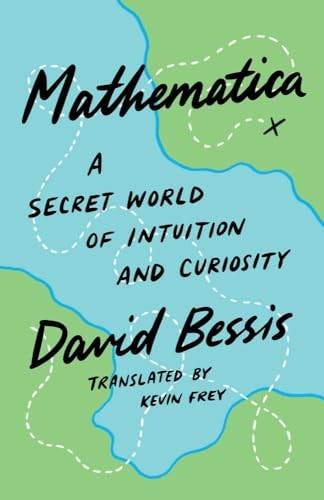
According to Mathematica: A Secret World of Intuition and Curiosity by David Bessis, if we could peer into a mathematician’s mind, we would see elegant mathematical objects dancing and twirling around each other. We would see something as impressive as F1, and as beautiful as a perfect drift. But rarely would we ever see pure number crunching. For Bessis, math is embodied, and more like learning to drive than memorizing a list of rules.
Here is my 2-sentence summary of Mathematica: Math isn’t calculation, but an agentic expression of expertise. There is something it is like to do math, something extraordinarily human, and it is our failure to teach this that leads to our innumerate “I’m not really a math person” society.
I knew I would enjoy this book, and I did. But until I wrote those two sentences, I didn’t realize just how much I enjoyed it. What follows is not so much a review as it is my attempt to make sense of what I find so compelling about Mathematica.
Mathematical objects are like hobbits
“In a hole in the ground there lived a hobbit.”
When J.R.R. Tolkien first wrote those words, he did not know what a hobbit was. There was nothing which those letters referred to. Words are supposed to refer to things, but “hobbit” did not.
But then he imagined them; a short hairy-footed folk. He saw them singing and dancing beneath the Party Tree, he imagined them smoking their pipes, he imagined them going on adventures. And because he imagined them, those meaningless letters h-o-b-b-i-t began to refer to something; a something in his head, but a something nonetheless.
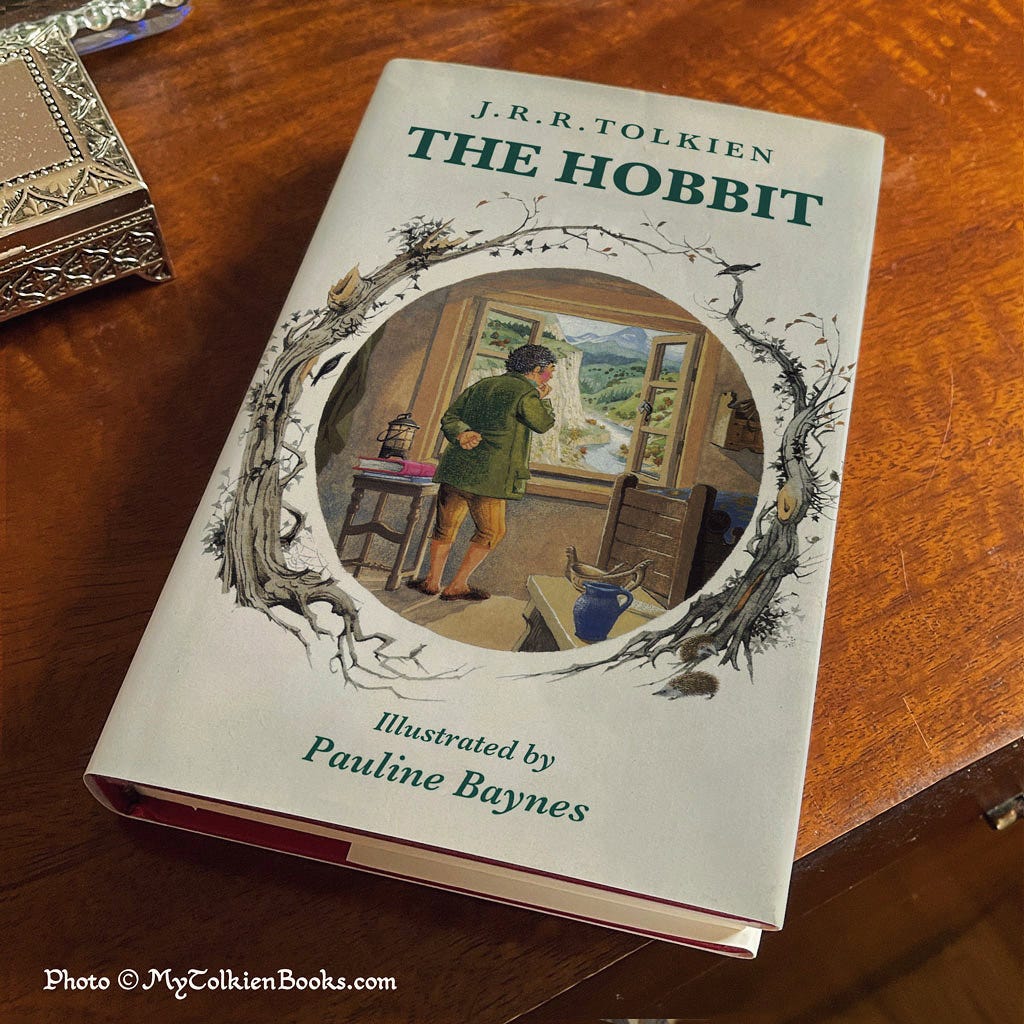
Math equations are also meaningless symbols on a page. At first, those numbers don’t refer to anything because you have not created an object in your head to which they could refer to. In that sense, mathematical objects are like hobbits; you must create them in your head or else it’s all just non-sense symbols on a page. If you want to understand, you have to will the fictional object into existence. Then, and only then, can symbols refer to something; a something that is in your head, but a something nonetheless.1
Consider these two propositions: (1) A right triangle and its mirror always form a rectangle, and (2) Every rectangle can be broken into two mirrored right triangles.
If I want to figure out whether these are true, I don’t start with a formula, but by imagining triangles and rectangles. I do this because I couldn’t even possibly understand what the formula meant unless I first imagined the objects the formula refers to. And while I am sure I could manipulate the digits in that formula (assuming someone gave it to me) and prove these two postulates without ever imagining anything, what would be the point? The symbols are not the math anymore than the word hobbit is a hobbit. The real math is the thing the symbols refer to; that thing that is happening in your imagination.
Now tell me, what does the Quadratic Formula refer to?
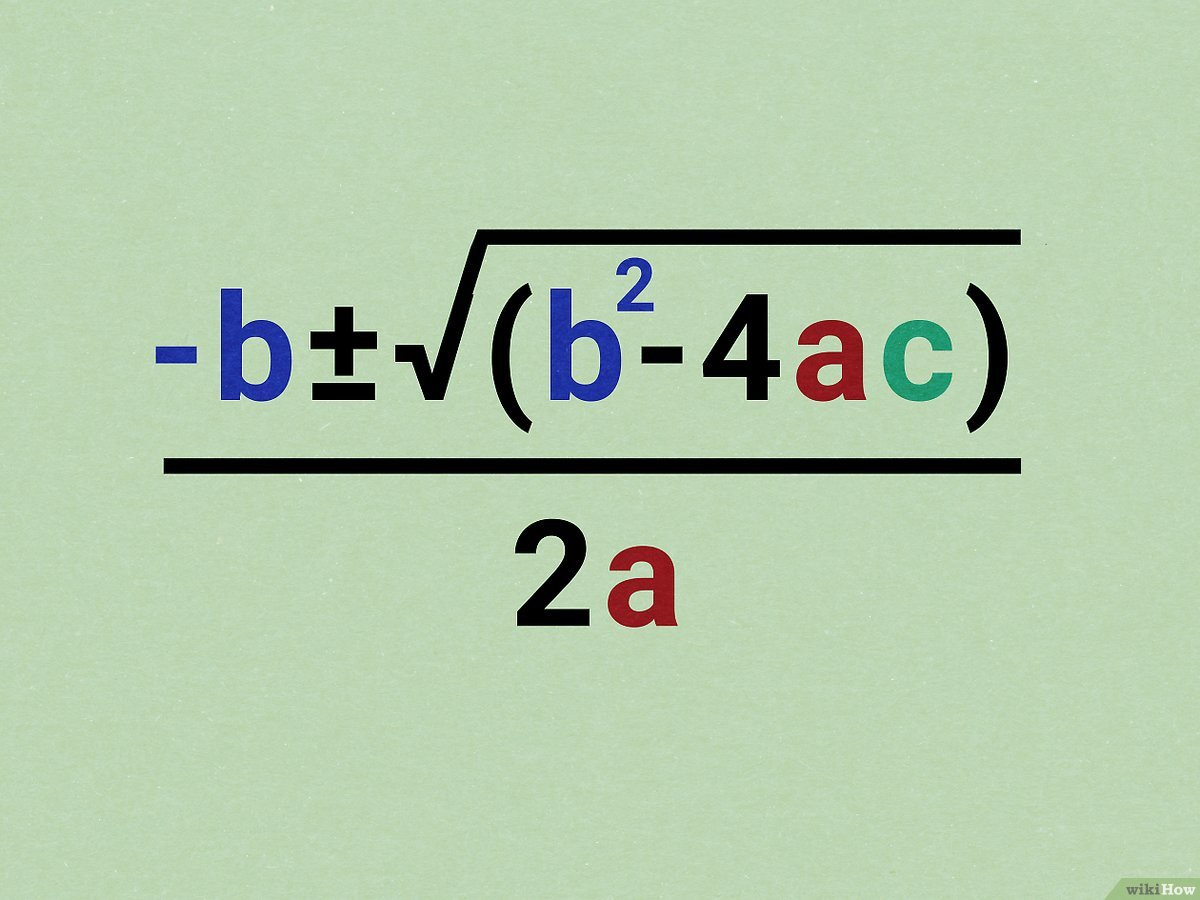
If you are like me, it refers to nothing. I was taught this formula like a computer; the meaning behind it did not matter so long as I could correctly memorize the rules and execute them one by one.
When I say the meaning of the quadratic formula, I do not mean some real-world application, but instead a mathematical object I can imagine and manipulate. The formula is supposed to refer to something, but no one ever taught me what it refers to. (Maybe something to do with parabolas? But it is a complete mystery to me how that equation could have anything to do with parabolas. I cannot read it in the way I can read the word hobbit.)
A series of memorized rules is not the same as understanding; not in driving, not in language, and not in math. Understanding is an exercise in imagination and intuition; two things that every child loves. But when we teach kids to compute numbers through a list of memorized rules, we tell them true embodied understanding is not necessary. It is like asking them to read The Hobbit by sounding out all the words one-by-one, but never imagining what the words refer to. “Just follow the rules of pronunciation, and you can read the entire book.” While true, what is the point?
Something it is like to do math
A human can try to execute rules in a memorized sequence like a computer, and there will be something it is like to try and do this. But the something-it-is-like is defined by words like boring, frustrating, and tedious, whereas mathematicians say math is none of those things. What gives?
Well, mathematicians are not trying to be computers. What would be the point? A computer is a computer, and mathematicians make for a rather terrible replacement. For Mathematicians, math is something felt, imagined, and embodied. They see mathematical objects and play around with them. Like a child playing an imaginary game, or a writer creating a fictional world, mathematicians are having fun with their imagination.
How embarrassing for them. How silly. How childish. Descartes believed the ancient Greek mathematicians were so ashamed of this fact that they hid it from the world. But until you accept that mathematics is fundamentally an act of imagination, then you will never understand the something-that-it-is-like to do math.
Imagine someone blowing a bubble. Imagine the bubble warp and wiggle before becoming a perfect sphere. Imagine the tension inside and on the surface. Imagine a strong gust of wind, and the momentum that causes some of the bubble to move a little bit slower, causing an uneven surface tension. Don’t just imagine it, feel the tension and the fragility.
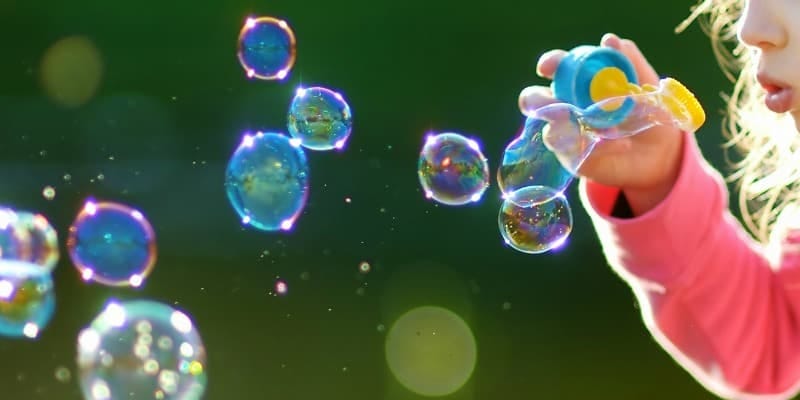
Is your imagination of the bubble perfect? Of course not. But it feels real and meaningful to you. This imaginary bubble in your mind is what we sometimes call a modal concept because it evokes many different sensory modalities, and so is entirely different from the meaningless amodal 0’s and 1’s that a computer manipulates. The multi-modality allows you to understand the bubble at an intuitive level as a mathematician would, and to play around with it instead of merely calculating it out as a computer would.
Not that the calculations are useless! They have a purpose. Your intuition and imagination are imperfect, and you can use math to help better shape your imagination to match reality, and to communicate what you are imagining to others. But the calculations are a corrective aid rather than a replacement for the richer multi-modal concepts in your head.
This is an entirely different way of engaging with math than what I was taught. It reminds me of Thi Nguyen’s concept of agentic mode, which is the peculiar something-it-is-like to use your agency in a particular way. There is something it is like to think through a tough chess position, to cook your favorite meal, to dance, to play tag, to flirt, to write a poem, to edit a paper, to get in a bar fight. Each of these requires you act in a way that evokes an aesthetic experience unique to that agentic mode.

Mathematics has its own agentic mode; one of imagination, meaning, and problem solving. There is even a particular agentic mode to imagining bubbles which feels different to me than imagining triangles and rectangles. Math comes in flavors, and some are more enjoyable to me than others. I suspect math is a bit like games in that everyone enjoys different types.
But the problem is, I was never told mathematics had any flavors at all besides tedious computation. I was never given the chance to fall in love. I was robbed of that opportunity when I was taught that math was memorization of formulas and the computation of meaningless amodal symbols. And since that was all I understood math to be, I thought, “I’m just not really a math person,” and concluded that if I ever needed to do math, I would just use a calculator. After all, not everyone can be Einstein.
How could anyone ever be expected to become an expert in math if they don’t know how to enjoy it? And how can they enjoy it when they are taught that math is meaningless amodal computations?
The nature of mathematical expertise
I research what we sometimes call deep expertise; things like how firefighters make a split-second decision to evacuate a house based on a gut feeling, how a nurse models how an infection spreads through a (supposedly) sterile procedure, or how a VICE agent spots a woman being trafficked.
Deep expertise is hard to define, and we sometimes define it in contrast to academic expertise. Academic expertise is about explicit facts, whereas deep expertise is about tacit knowledge; all the stuff that is difficult (or impossible) to articulate - the patterns an expert recognizes, the mental models they rely on, the agentic mode that they access.
It was this interest in deep expertise that drew me to Mathematica, a book that is in essence about the tacit knowledge of math. About how expertise in mathematics is more than the explicit rules found in textbooks, and is instead simultaneously something much more human and much more extraordinary.
So, what is the nature of mathematical expertise?
Consider the story of a young Gauss whose class was assigned a tedious problem; the sum of all the numbers 1 to 100 (1+2+…+100). Gauss was only in elementary school but somehow, he managed to find an elegant solution that allowed him to solve it intuitively. If you are not familiar, you might see if you can figure out a solution before I spoil it for you.
Gauss imagined the sequence of numbers twice, stacked on top of each other, one counting up and the other counting down.
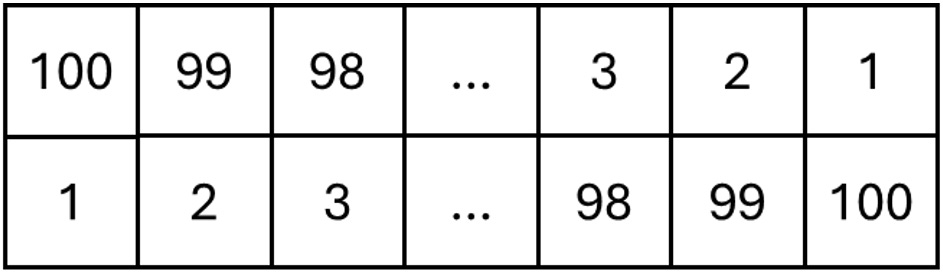
From this perspective, you can see that every column (of which you would have 100) adds to 101. Well, 101x100=101,000, and then you divide by two because you added up the number line twice, and you get 5,050. Therefore the sum of 1 to 100 is 5,050.
What is so amazing about this story isn’t the calculation itself which is so simple that a fifth grader could do it (My fifth grade teacher was the first person to tell me this story). The amazing thing is that Gauss was able to come up with a method of representing the problem so simple even a 5th grader could do it.
How do we characterize this ability? It’s not computation. Turning a hard problem into something simple is not computation; a computer cannot reformulate a problem for itself. IQ is also too simple to be fully explanatory because IQ is (supposedly) stable and I didn’t understand this method enough to use it a decade ago when I was doing the GRE, whereas now it is so intuitive that I will never forget it.
If it is not computation or intelligence, how do we describe what Gauss did?
From the perspective of what I study, I want to call this expertise.
Expertise is not the application of memorized rules. If it were, experts wouldn’t be able to adapt to novel scenarios and problems. In complex domains, rules and procedures are insufficient because the fundamental problem isn’t about applying known rules, but figuring out how to frame the situation in the first place as the frame implies how a situation should be handled. As John Schmitt has said, “problem formulation and problem solving are not merely linked cognitive processes. They are the same cognitive process.”
In my opinion, this is the fundamental nature of expertise; the ability to reformulate problems in ways that allow you to rely on intuition and what you already know. Indeed, this is the entire nature of decision-making and problem solving.
Let’s put this back in the mathematical context; every solvable problem in mathematics which has not yet been solved only remains so because we have not found the right way to represent the problem. The problem we must solve isn’t computational power, but representational know-how. Because if you can find the right representation, then even problems that seem computationally heavy become tractable. But this extends far beyond mathematics, as Herbert Simon points out (p144 of the PDF):
[A]ll mathematical derivation can be viewed simply as change in representation, making evident what was previously true but obscure. This view can be extended to all of problem solving. Solving a problem simply means representing it so as to make the solution transparent.
This is what Gauss was able to do with the summation problem, but it is also what expert firefighters, nurses, and VICE agents do everyday. Expertise isn’t about application of rules, but about your ability to frame problems up such that you do not need to do tedious evaluation of every data point, sum up every number, or keep track of 10 different things. Instead, experts frame up a problem into something simple and familiar such that they can see the answer intuitively.
As I have argued elsewhere, there is no System 2; humans just find ways of turning problems into common sense by finding effective ways of framing problems.2 From this, maybe we should conclude that mathematical genius is representational in nature, not computational. And such representational know-how is not trained through repetitive homework problems, but through learning how to play with and imagine multi-modal mathematical objects in all their diversity.
The nurture of mathematical expertise
I think those of us who study expertise feel intensely the tension between how ordinary it is to be extraordinary.3 Experts amaze us, and yet expertise is everywhere. Just consider the amount of expertise that went into building the place where you live; plumbing, wiring, carpentry, materials science, mechanical engineering, and on and on.
And of course, consider the expertise of driving. We all like to joke about how many people are bad drivers. But there are about 2 billion licensed drivers in the world today who can manage a two-ton hunk of metal through busy streets, and accidents are relatively rare. Many of these drivers are 16 years old and at the bottom of their class. Yet somehow, they develop this expertise.
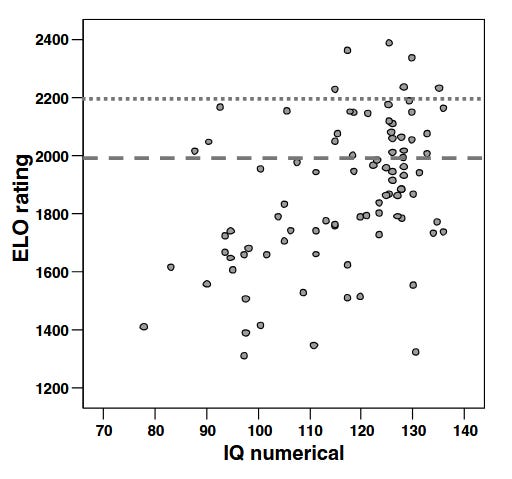
This brings up an uncomfortable question; how important is IQ for true levels of expertise?
If I am right that expertise, including mathematical expertise, is about finding good representations, then perhaps IQ is less important than repeated practice of manipulating imaginary objects in your mind. Mathematics, even complex mathematics, might be like reading, riding a bike, or basic driving skills; something anyone healthy can learn so long as they have the conditions for intuitive expertise. After all, the ancient Egyptians would have been shocked to learn that literacy is basically a solved problem, and even more shocked by the fact that the average 16 year old can drive at 60 miles per hour without incident. Perhaps we will be similarly shocked to see how widespread numeracy could be if it were taught right?
I am actually not entirely sure where I stand on this debate,4 but Bessis takes a sensible middle position in which he doesn’t completely dismiss the importance of IQ but points out just how inadequate an explanation it is for the gaps in math proficiency. The IQ bell curve can no more explain the difference in math ability between mathematicians and the rest of us than it can explain why a car mechanic is better at fixing cars than a mathematician. There must be more to the story than what we are born with.
All things considered, I do lean towards Bessis’ view. There is nothing about my own education that makes me think math classes produce the conditions for intuitive expertise any more than the bizarre Taxi/F1/Autopia society I introduced at the beginning of this essay would produce the conditions for driving expertise. This makes me think that mathematics could be a skill like driving, reading, or any of those working-class jobs that are required to make your living style possible (but which are often unfairly dismissed as not cognitively complex).
My own history is not irrelevant to how I came to this conclusion.
I always hated math. As a kid I did both Hooked on Phonics and Hooked on Math (or the knock-off version of them) because of how much I struggled in school. In high school, I never went higher than Algebra II, and didn’t even bother taking a math class my senior year.
But then in college I took a stats class, and a friend challenged me to really try and understand the subject. Over Christmas break I spent some hours trying to understand distributions and how they relate to various statistical tests, and after a while it clicked. It became intuitive. After break, I remember explaining what a p-value was to someone and rattling off the definition word-for-word, not because I had memorized the definition, but because the concept had become so intuitive that I re-created the definition on the fly. At the time, I thought, “Wow, I don’t have a math brain, but I do have a stats brain.”
But how stupid of me! Truth is, I was always capable of math; what I lacked was the understanding that mathematical symbols refer to mathematical objects that I had to create in my own mind. But one winter I managed to understand the particular mathematical object called a distribution, and as a result the mathematical subdiscipline of stats clicked for me in a way no other mathematical subject ever has.
Of course, I could be wrong about my own experience, and Bessis could be wrong about IQ. But if Bessis is right, then every minute we spend not running this experiment is a travesty. It is, in the end, an empirical question whether this approach to math would solve the innumeracy issue. An empirical problem that cannot be resolved through IQ tests5 or parents teaching their own children, but only in classrooms with a diverse array of students.
I don’t know how to run this experiment myself; I don’t know how to turn most math problems into mathematical objects, and lack the funds and time. I have some good friends who are better placed than I to advocate something, but they haven’t solved this problem either. So, Bessis, consider this a call to action. I believe the onus is on you. Prove to the world your thesis and go down in history as the person who solved innumeracy, or go down as the guy who claimed, “Real mathematics has never been tried.”
Math class as anorexia
As part of their recovery process, Anorexia patients are sometimes told to eat until they are full. The problem with this advice is that many patients have been making decisions off calorie counters for so long that they no longer know the feeling of fullness. They’ve lost the something-it-is-like to be full. They’re so disconnected from their own body that they have become dependent on an external counter.
If Bessis is right, then this is how we should think about math education. We teach students to compute, and in so doing they lose the felt sense of what numbers represent. Math becomes something amodal and therefore meaningless; deterministic and therefore un-agentic; tedious and therefore ugly. We replace the felt tension inside an imaginary soap bubble with computations, and in so doing, forget how modal and embodied math really is.
Most of us have made peace with the difficulty and tediousness of math because, well, true mathematics can only be done by geniuses who have some kind of special math brain. We’ll never be Einstein, so why even try to develop intuition and expertise when a computer can do the work for us?
But what I took away from this book is a conclusion I’ve been playing with for a while now, which is this; the psychology of expertise isn’t exceptional. Expertise isn’t rare. Rather, it is how we navigate, walk, talk, breathe, do math, or even sense that we are no longer hungry. Expertise only feels so unobtainable because we think of it as something relative that places humans in a hierarchy, when instead we should think of it in terms of basic human development, and the ordinary human faculties of intuition, pattern matching, and imagination. Expertise is the natural development of human capacity.
You might not ever be the top 1% best expert in the world. But you are also not the 1% best at driving, you are not the top 1% at walking, you are not even the top 1% in sensing when your tummy is full. But yet, not being the top 1% hasn’t led to your funeral, so why should numeracy be any different? You cannot be a world expert at everything, but you cannot be a computer at anything - not even a little bit. It is not in your nature. All that you can do is develop your intuition and expertise because that is the essence of human learning, including when it comes to math.
So to end this essay, here again is my two-sentence summary of Mathematica: Math isn’t calculation, but an agentic expression of expertise. There is something it is like to do math, something extraordinarily human, and it is our failure to teach this that leads to our innumerate “I’m not really a math person” society.
Note: I could not fit my thoughts about the implications for decision-making, neuroplasticity, and “System 3” into this piece, so I will save it for a future essay. Maybe in August.
There is an interesting comparison to Simone Weil’s ideas on Geometry vs. Calculus, and I am not sure why Bessis doesn’t mention this.
See also the concept of Horizontal Products which is the technological implementation of how representations aid in thinking.
For example, see K. Anders Ericsson’s view on IQ.
I want to tell everyone on Twitter/X to take IQ 90% less seriously - I do not think most of the inferences and implications they make are valid. I want to tell the average American to take it 30% less seriously, and to ignore it in their personal life. But I also want to tell academics to take it about 30% more seriously; there are consequences to ignoring the very real results of IQ research, and ceding the debate to the most partisan academics is a bad idea.
Mathematicians practice manipulating shapes in their mind, and so are essentially training for the test. I do not consider their IQ results valid and comparable to the general population. I think this might also be true for chess players.
«It is, in the end, an empirical question whether this approach to math would solve the innumeracy issue. An empirical problem that cannot be resolved through IQ tests or parents teaching their own children, but only in classrooms with a diverse array of students.»
Not necessarily, I suspect.
One point is that (in my understanding) that parents (or relatives, or friends, or tutors, or the like) do overwhelmingly more mathematics teaching than classroom teachers, and that this has been true at least since the 1980s. (At first glance this might sound implausible but compare it to the situation outlined in Why Johnny Can’t Read—and schools place far more emphasis on reading education than math education!)
But a deeper point is that driving, walking, etc. are practical activities dedicated to the goals of our pre-intellectual nature. Even chess satisfies our (very strong!) primate-level desires for competition and social status. Mathematics does none of that: it satisfies our desire for beauty. How many people have much of a desire for beauty, e.g. in music?
And I’d say further (maybe I’m disagreeing with Bessis here) in saying that learning mathematics is more like learning a foreign language, or rather like learning a foreign Lebenswelt, the Lebenswelt der reinen Schönheit as we might call it, that can only be described in a foreign language! Not many people have a taste for that, just as not many people have a taste for learning languages or for excelling in the foreign world of music or of the visual arts. (And so you get people saying «I can’t draw», «I can’t sing», or «I can’t speak foreign languages» quite frequently—even though, clearly, almost any motivated person can do all three. And among the minority of people who can sing, how many of them take the trouble e.g. to sing four-part harmonies?)
Of course more people excel in music and drawing than in mathematics. But that has to do somewhat with social status and even more with the absence of people who want to tutor children in mathematics the way someone would tutor children in drawing or in playing the violin.
(By the way, if you’ve read this far, a word of advice: such tutoring is eudæmonic like almost no other activity (both for oneself and for one’s students) and it’s not even difficult so long as one knows one’s mathematics! (Although optimizing it, like optimizing anything else, is indeed difficult and time-consuming…))
Lockhart's Lament comes to mind here as another good essay from this perspective.
Also, though, I'm reminded of HollyMathNerd's point that practice to the point of reflex, when structured correctly, helps make the connection to the underlying structure obvious.